6 Min Read
For homeowners thinking about San Francisco home remodeling in 2027, the most important decisions may happen well before construction begins. Across the city, homeowners are considering how their properties can support changing lifestyles, evolving family needs, and long-term plans. In neighborhoods known for distinctive architecture and established homes, remodeling is increasingly about making thoughtful changes that will serve a household for years to come.
Whether the goal is to create more functional living space, accommodate multiple generations, or modernize an older property, the conversation often begins with a bigger question: What should this home become? Understanding the decisions homeowners are making now can help you approach a future remodel with greater clarity, realistic expectations, and a stronger plan.
In This Blog:
- 1. Looking Beyond Cosmetic Updates to Long-Term Living
- 2. Reimagining Floor Plans Instead of Simply Adding Space
- 3. Considering Home Additions With a Long-Term Perspective
- 4. Preparing Homes for Multiple Generations
- 5. Prioritizing What Happens Behind the Walls
- 6. Deciding Whether to Remodel or Move in San Francisco
- 7. Starting the Remodeling Conversation Earlier
- 8. Choosing a Remodeling Partner Who Prioritizes Stewardship
- 9. Making Decisions That Will Still Feel Right Years From Now
- Plan Your Next Chapter With S.A. Baxter, Inc.

1. Looking Beyond Cosmetic Updates to Long-Term Living
One of the defining themes behind San Francisco remodeling trends in 2027 is a shift toward long-term thinking. Rather than focusing exclusively on finishes or isolated updates, homeowners are evaluating how their homes function as a whole.
A home that worked beautifully five or ten years ago may no longer reflect the way its occupants live today. Work arrangements change, families grow, and priorities evolve. A successful remodel begins by understanding those changes before deciding which walls to move or spaces to expand.
Some of the questions worth exploring include:
- Does the current layout support everyday routines and entertaining?
- Are there underused areas that could serve a more meaningful purpose?
- Will the home accommodate changing mobility or accessibility needs?
- Which improvements will remain valuable as the household evolves?
These conversations can help distinguish short-term preferences from decisions that deserve a more substantial investment.
For homeowners considering Bay Area home remodeling, the objective is not simply to create a newer-looking home. It is to develop a property that feels cohesive, comfortable, and well suited to the people living in it.
2. Reimagining Floor Plans Instead of Simply Adding Space
More square footage is not always the first answer to a home's limitations. Sometimes, the greater opportunity lies in reconsidering how existing rooms connect and function.
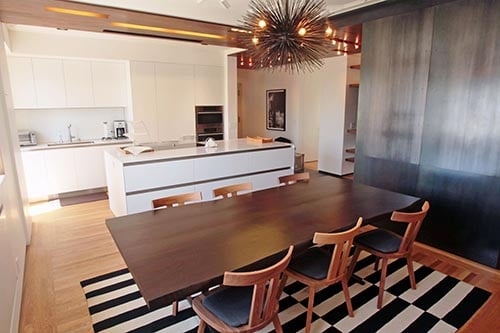
Older San Francisco homes may have compartmentalized layouts, circulation challenges, or spaces that no longer align with contemporary lifestyles. Reworking these areas can create a more natural relationship between living, dining, kitchen, and outdoor spaces.
Homeowners exploring a major home renovation in San Francisco may be considering changes such as:
- Improving circulation between primary living areas.
- Creating stronger connections between interior and exterior spaces.
- Repositioning rooms to take better advantage of natural light.
- Establishing flexible spaces that support work, guests, or changing family needs.
These decisions are rarely just about aesthetics. Moving walls, changing openings, or altering the relationship between floors can introduce structural, mechanical, and permitting considerations.
That is why early collaboration between the homeowner, architect, and construction team matters. A promising layout concept becomes more useful when its practical implications are understood before the design advances too far.
3. Considering Home Additions With a Long-Term Perspective
For some homeowners, reconfiguring existing space will not provide enough room for the next stage of life. A substantial addition may offer a way to remain in a valued neighborhood while creating the space the household needs.
In San Francisco, however, adding square footage requires careful planning. Lot conditions, existing structures, neighborhood context, and local review requirements can all influence what is feasible.
Homeowners researching a second-story addition in San Francisco should begin with several foundational questions:
- Is the existing structure suitable for the proposed expansion?
- How might the addition affect the home's architecture and proportions?
- What are the implications for stairs, circulation, and daily living?
- Which planning approvals and building permits may be required?
An addition should feel like a considered extension of the home rather than an afterthought. The strongest outcomes balance new functionality with the character of the original property.
Understanding San Francisco home addition permits early is especially important. Depending on the proposal and property, planning review, neighborhood notification, historic preservation considerations, and building permit requirements may affect the design and schedule.

4. Preparing Homes for Multiple Generations
Family needs are another reason homeowners are reconsidering their properties before 2027. Some households are planning for aging parents, returning adult children, frequent extended-family visits, or their own long-term ability to remain at home.
Multigenerational home remodeling does not necessarily mean creating completely separate residences. Often, it means designing a home that offers a better balance of connection, privacy, and flexibility.
Potential priorities include:
- Bedroom and bathroom arrangements that offer greater privacy.
- More convenient access to essential living areas.
- Flexible rooms that can change purpose over time.
- Thoughtful circulation between shared and private spaces.
The right solution depends on the household and the property's physical constraints. A layout that supports a family today should ideally remain adaptable as circumstances change.
For larger remodeling projects, these considerations are best addressed as part of the overall architectural plan rather than introduced as isolated modifications later.
5. Prioritizing What Happens Behind the Walls
Beautiful finishes are often the most visible result of a remodel, but some of the most consequential decisions involve systems that visitors never see.
When planning an older home renovation in San Francisco, homeowners may need to consider the condition and capacity of existing electrical, plumbing, heating, ventilation, and other building systems.
The scope of necessary work varies by property. A major remodel can create an opportunity to evaluate infrastructure alongside changes to the layout, rather than addressing each issue separately over time.
Common areas for early investigation include:
- Electrical capacity and anticipated future needs.
- Plumbing conditions and fixture locations.
- Heating, cooling, and ventilation strategies.
- Insulation, moisture management, and building-envelope performance.
- Structural conditions that may affect the proposed design.
These home infrastructure upgrades may not be the most exciting part of a remodeling conversation, but they can have a significant impact on comfort, reliability, and long-term satisfaction.
6. Deciding Whether to Remodel or Move in San Francisco
For homeowners who love their neighborhood but feel constrained by their current house, the remodel-versus-move question can be difficult.
Moving may offer a different floor plan or more square footage, but it also means evaluating available inventory, transaction costs, location preferences, and the compromises that come with another property.
Remodeling presents a different set of considerations. It allows homeowners to preserve what they value about their current location while making significant changes to the home itself.
A useful comparison should consider more than construction costs or purchase prices:
- Location: How important is staying near established routines, schools, friends, or community connections?
- Property potential: Can the existing home reasonably support the desired changes?
- Timing: How do remodeling and relocation schedules compare?
- Disruption: What would each option require of the household?
- Long-term fit: Which path is more likely to support the next ten or fifteen years?
For homeowners attached to a particular San Francisco neighborhood, a major remodel or addition may deserve serious consideration before deciding to relocate.
The best answer is personal. It depends on the home's potential, the family's priorities, and a realistic understanding of the investment and process involved.
7. Starting the Remodeling Conversation Earlier
One of the most useful decisions a homeowner can make before 2027 is to begin planning earlier than expected.
Large-scale remodels and additions involve more than selecting finishes and hiring a contractor. Architectural design, engineering, feasibility studies, budgeting, permitting, and construction planning all require time.
For substantial projects, a planning horizon of 12 to 24 months before a desired construction start can be a useful conversation starter, although actual timelines vary significantly with scope, design development, and approvals.
The purpose of planning early is not simply to get onto a construction calendar. It is to create enough time for better decisions.
8. Choosing a Remodeling Partner Who Prioritizes Stewardship
A major remodeling project requires a meaningful commitment of time, money, and trust. Homeowners benefit from a team that approaches that responsibility with care.
S.A. Baxter, Inc. works collaboratively with architects and other design professionals on substantial residential remodeling and addition projects. Its approach is built on craft, stewardship, and trust, helping clients navigate important decisions while remaining attentive to their goals, resources, and overall project experience.
For homeowners preparing for structural remodeling in San Francisco, early construction input can be particularly valuable. Architectural ideas often carry implications for structural systems, site logistics, construction methods, and cost.
When choosing a construction partner, homeowners should consider:
- How the team communicates during planning and construction.
- Whether it has experience with projects of comparable scale and complexity.
- How it collaborates with the architect and other professionals.
- How it approaches budgeting, decision-making, and unexpected conditions.
- Whether its working style feels aligned with the homeowner's priorities.
A successful working relationship is about more than technical execution. It also depends on transparency, collaboration, and confidence in how the project will be managed.
9. Making Decisions That Will Still Feel Right Years From Now
The most meaningful remodeling decisions often begin with an understanding of what a homeowner wants to preserve.
That might be the character of an older San Francisco house, a connection to a beloved neighborhood, or the ability to host family gatherings in a familiar setting. The goal is to make room for what comes next without losing what made the property special in the first place.
Before committing to a design direction, it helps to distinguish three categories:
- What must change: The functional problems that the remodel needs to solve.
- What should improve: The qualities that would make daily life more enjoyable.
- What should remain: The architectural features, relationships, or experiences that give the home its identity.
This framework encourages thoughtful priorities and helps guide decisions when trade-offs arise.
Looking toward 2027, the most enduring remodeling choices are likely to be those that reflect how people actually want to live, not simply which design features are popular at the moment.
Plan Your Next Chapter With S.A. Baxter, Inc.
S.A. Baxter, Inc. partners with homeowners and architectural teams to help bring thoughtfully planned residential projects to life, with an emphasis on collaboration, careful execution, and responsible stewardship.
If you are beginning to imagine what your home could become in 2027 or beyond, now is a good time to start the conversation.
Contact S.A. Baxter, Inc. to discuss your vision for your home.